
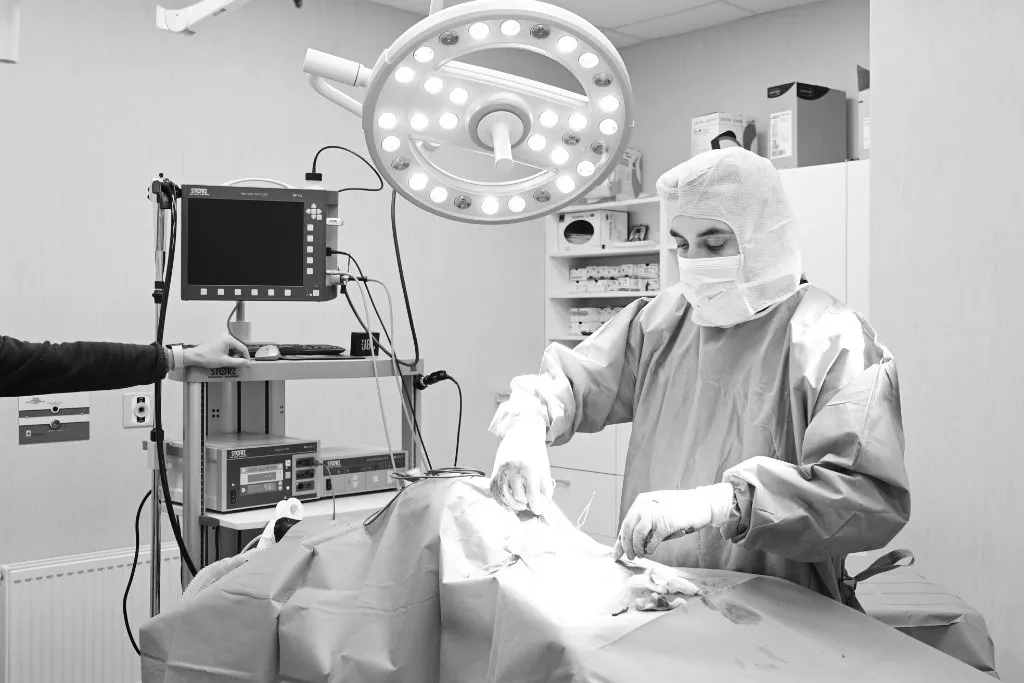
Endoscopy
Endoscopy is a minimally invasive method of examining hard-to-reach parts of the body with a camera. In most cases it is used for diagnosis, giving excellent visualisation and allowing samples to be taken from lesions and abnormalities. It can also be used therapeutically – this is called interventional endoscopy.
Respiratory tract (rhinoscopy, tracheoscopy, bronchoscopy)
A technique for examining and diagnosing problems of the respiratory system (nasal cavity, trachea, bronchi), most often presenting with sneezing, coughing and laboured breathing. Also used to collect samples for microbiological, cytological or histological examination.
Upper digestive tract (oesophagoscopy, gastroscopy, duodenoscopy)
Visualisation of the oesophagus, stomach and duodenum. Besides diagnosing inflammation and ulcers, endoscopy allows the extraction of foreign bodies and removal of polyps, avoiding open surgery. After endoscopic removal of a foreign body your pet can return to its normal routine the same day.
Lower digestive tract (colonoscopy)
Used to diagnose diseases of the large intestine. Colon polyps can be removed with this technique.
Urogenital tract (vaginoscopy, urethroscopy, cystoscopy)
Endoscopic examination of the urogenital system: inspection of the urinary tract and extraction of bladder stones and polyps (where size allows).
Video otoscopy
Examination of the external ear with an endoscope. Allows precise cleaning and diagnosis of the ear canal down to the eardrum.
Abdominal endoscopy (laparoscopy)
A minimally invasive surgical method widely used to diagnose diseases of the abdominal organs. Makes it possible to take biopsies from various organs, with many advantages over ultrasound-guided biopsy and open surgery.
Specialists in this department

Book an appointment
Contact us for a consultation or to book an appointment.